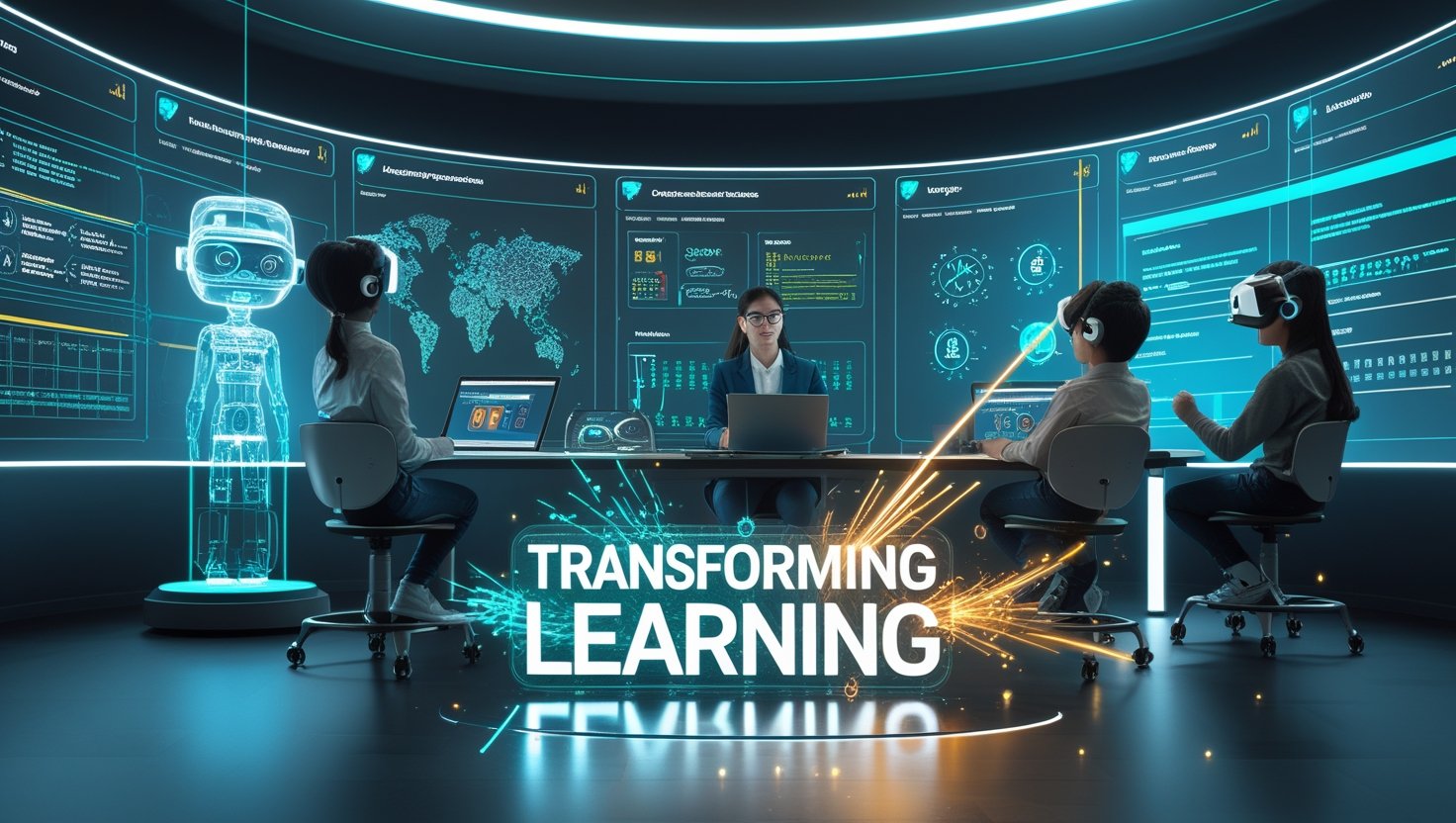
In today’s modern era, the method of education is changing rapidly, and the most important role that is playing in this transformation is STEM education. STEM means Science, Technology, Engineering, and Mathematics. These four subjects together form an approach that prepares students not just for theory but for practical life. Earlier, the focus in school education was more on cramming and scoring marks, but now the world needs people who can understand problems and find solutions to them. The main goal of STEM is to inculcate analytical thinking, creativity, and a spirit of innovation in students.
Currently, every industry, be it health, business or IT sector, has a demand for people who understand the right use of technology and science. STEM education not only provides knowledge but also prepares students for real-world challenges. It also teaches them essential skills like teamwork, leadership, and independent thinking. If today’s students follow STEM-based learning, they are prepared not only for exams but also for future careers.
In this blog, we will look at how STEM education is being applied in new ways in schools and colleges, and how it is preparing an empowered generation for the future who will become not just learners but also innovators.
Integrating STEM into Early Education:
If STEM education is introduced at a young age, children’s interest naturally shifts towards science and technology. Early education means pre-school and primary level, where children’s minds are ready to learn new things. At this stage, if they are introduced to basic experiments, simple coding games, and hands-on activities, their problem-solving and logical thinking skills develop. This approach prevents them from depending only on books and gives them the interest to understand real-life things.
In schools, children can easily understand difficult concepts if they are given opportunities to build simple robots, use digital apps, or create science models. STEM teaches them to explore and create rather than just memorize. If teachers encourage curiosity during this phase, it becomes a strong foundation for future education.
The integration of STEM at an early age challenges students’ minds, gives them the courage to ask new questions, and teaches them to work as a team. When a child experiments with the help of science or solves a problem using maths, their confidence increases. Such children not only become intelligent students in the future but can also become innovative professionals.
How STEM Enhances Problem-Solving and Critical Thinking:
One of the biggest benefits of STEM education is that it enhances problem-solving and critical thinking skills in students. When students perform tasks related to science and technology, they have to think about each step, apply logic, and find new ways. This method moves them away from rote learning and toward real learning.
Solving math problems, building engineering models, or completing coding tasks, all of these activities train students to find logical solutions to any problem. In this process, their ability to analyze increases, they start thinking of alternative solutions, and they also learn to take risks. Critical thinking means understanding any information and developing your idea based on it, and STEM develops exactly these skills.
When a student works on a project where he has to create something new with limited resources, he thinks, experiments, and learns from mistakes. This process makes them mentally strong and prepares them for future challenges. STEM prepares students not just for the classroom but for the real world. Problem-solving and critical thinking help them in every field, be it business, science, or a career in any other career.
The Role of Technology and Innovation in STEM Classrooms:
Today’s STEM classrooms are no longer limited to traditional blackboards and books. The role of technology has expanded so much that every student has access to digital tools and learning apps that make learning interactive and engaging. Tools like smartboards, tablets, coding kits, 3D printers, and virtual reality have become a part of classrooms. With these tools, students not only learn theories but also apply them practically.
Innovation means finding new ways to solve a problem. STEM classrooms give students the freedom to develop their ideas, create projects, and be a part of new inventions. Teachers are not just instructors in these classrooms but rather guides who boost students’ creativity.
When a student completes an electronic project with their own hands or develops an app through a coding task, they feel a sense of ownership. He works not just for marks but for learning. With technology and innovation, STEM classrooms become an exciting place for students where they are motivated to learn something new every day. Such classrooms lay the foundation for an innovation-driven society.
STEM and Career Readiness: Preparing Students for Future Jobs:
In today’s job market, those who understand the tools of technology, science, and math are more successful. STEM education makes students aware of the skills needed for future jobs at an early stage. Career readiness does not mean just getting a degree, but acquiring the skills that are required in any profession, such as critical thinking, creativity, digital fluency, and communication skills.
STEM fields such as AI, robotics, data science, space technology, and environmental science are growing rapidly. If students develop a foundation in these areas, they have excellent career opportunities. STEM education teaches them not only theoretical knowledge but also practical skills that are useful in any job.
Many students who join internships or entry-level jobs are already familiar with coding, lab work, or research methods. This confidence and knowledge put them ahead of the competition. STEM makes them problem solvers and team players, which is valuable to any organization.
STEM careers are not just limited to becoming a scientist or engineer. Business analysts, UX designers, biotech researchers, and even financial experts also come from a STEM background. Therefore, STEM education plays an important role in strengthening the future of every student.
Conclusion:
STEM education is not just an academic choice, but a national and global necessity. As the world rapidly moves toward technology and science, we must prepare our young generation for the future. STEM develops skills in students that are required in every field today, such as logical thinking, creativity, communication, and adaptability.
If we promote STEM learning in schools and colleges, train teachers, and give children hands-on experiences, we can prepare a generation that will be creators and innovators, not just consumers. Such students will not just be looking for jobs, but will also create new ideas and technologies.
This transformation is not just of education, but of the entire society. When children learn to think in new ways, they have a positive impact at every level in technology, health, environment, and economy. Through STEM, we are moving toward a future where knowledge and innovation will be of greatest importance.
That is why we must take STEM education seriously, support it at every level, and inspire students, so that we can move toward a future where every child can become a confident, skilled, and future-ready individual.