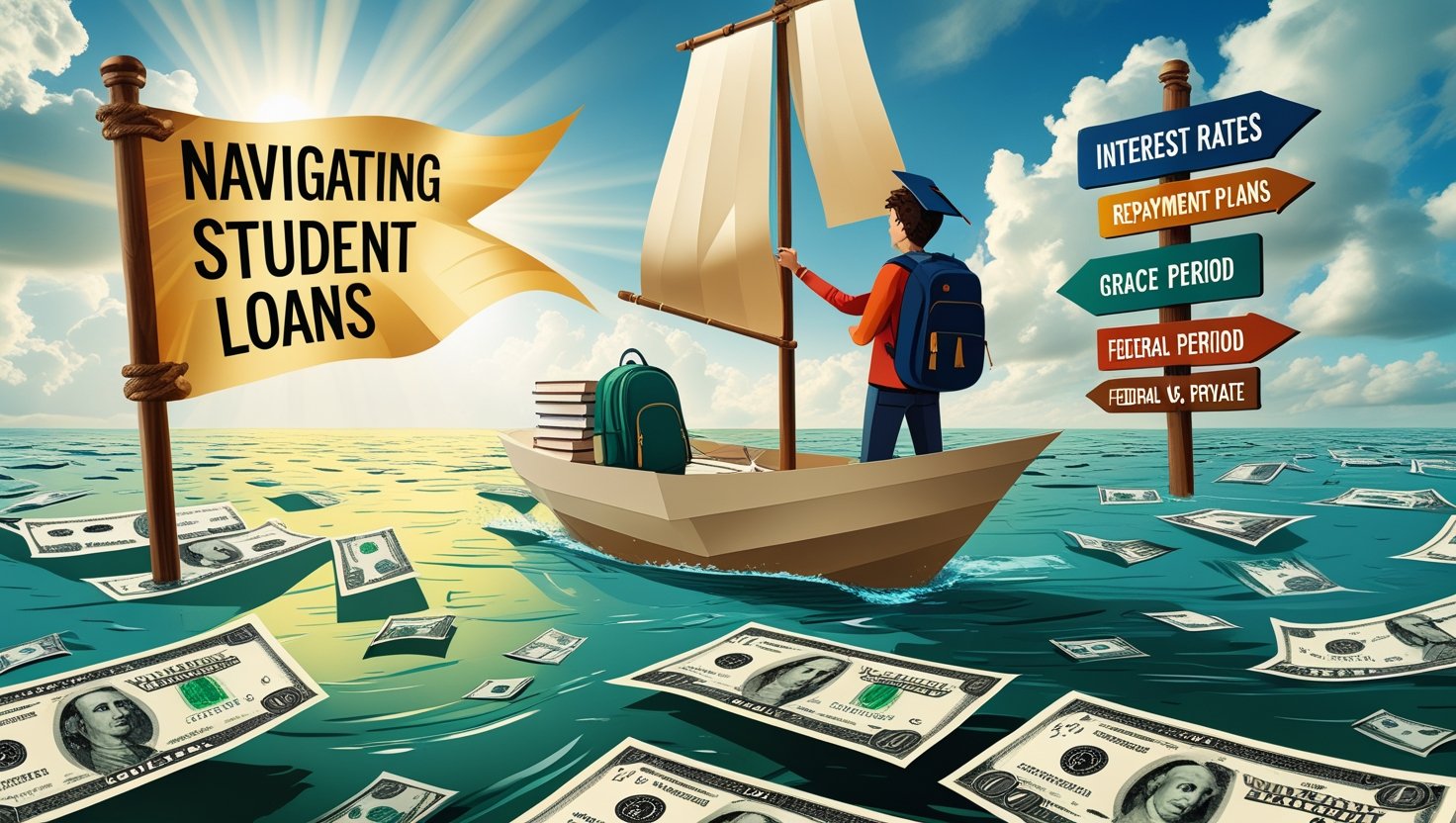
Nowadays money is getting very expensive and hence many students have to take student loans to complete their higher education. These loans have become a necessity for them but when they have to be repaid after graduation, there is a lot of confusion and stress. It is also important to understand the student loan system so that you do not fall prey to financial problems in future.
The structure of every student loan is slightly different ; some are federal which are provided by the government and some are private which are available from banks or private institutions. Every loan has its own rules regarding repayment and if you do not understand these rules then you may face unnecessary burden.
This blog aims to give you clear and easy guidance about repayment options and strategies for student loans. Here you will learn which plans may be suitable for you and how you can smartly handle your loan. This information will help you become financially stable.
Types of Student Loans: Federal vs. Private:
Student loans are of two major types: federal loans and private loans. Federal loans are those provided by the government. Their interest rate is usually low, and repayment options are flexible. Federal loans include Direct Subsidized Loans, Direct Unsubsidized Loans, and Direct Loans. In subsidized loans, the government pays the interest as long as you are in school or during the grace period. In unsubsidized loans, you have to bear the interest yourself.
On the other hand, private loans are provided by banks, credit unions, or other financial institutions. Their interest rate is higher, and repayment terms are not so flexible. You should make a good assessment of your financial situation and repayment ability before taking a private loan. These loans should only be taken out if you do not have federal options available to you.
If you are looking to take out a student loan, explore federal loan options first. The choice of a private loan should be made last. It is important to understand the difference between these two types so that you can avoid the burden in the long term and make the right decision.
Grace Periods and When Repayment Begins:
When you complete your education, every student loan is given a grace period. This is the time when you do not have to start repayment immediately. This grace period is usually of 6 months, but it depends on which loan type you are using. This facility is often available in federal loans while in private loans every institution has its own rule.
The advantage of a grace period is that you get some time to find a job and do your financial planning. But it is important to understand that interest may accrue during the grace period in every loan type. If your loan is unsubsidized or a private loan, interest keeps accruing, which gets added to the principal amount when your repayment starts.
During this period, you should prepare your budget, estimate your monthly expenses, and decide which repayment plan is best for you. Do not waste the grace period; rather, use it to make your future financially stable.
Standard, Graduated, and Income-Driven Repayment Plans:
When you start repaying your student loan, you have several options. The most common plan is the Standard Repayment Plan, where you pay a fixed monthly amount for 10 years. This plan is best for people who are earning a steady income and want to repay the loan quickly.
The second option is the Graduated Repayment Plan where you pay a low amount initially and then the amount increases over time. This is good for graduates whose income is low now but is likely to increase in the future.
The third and more flexible option is Income-Driven Repayment Plans (IDR). In this plan, your monthly payment is decided according to your income and family size. There are some sub-plans under IDR like PAYE, REPAYE, IBR, and ICR. The advantage of these plans is that if your income is less than your monthly burden also reduces.
Every repayment plan has its own pros and cons. You should look at your financial situation and decide which plan is better for you in the long term.
Loan Forgiveness Programs – Who Qualifies and How:
If you’re repaying federal student loans, there are specific loan forgiveness programs available that forgive your remaining loan. The most popular program is Public Service Loan Forgiveness (PSLF). This is for people who work in government jobs or the non-profit sector. If you make consistent monthly payments for 10 years and work for an eligible employer, the rest of your loan can be forgiven.
Another option is Teacher Loan Forgiveness, which is for teachers who teach in low-income schools for up to 5 years. This program can provide loan forgiveness of up to $17,500. Some IDR plans also have forgiveness options. If you make regular payments on income-driven plans for 20 or 25 years, the remaining loan can be forgiven. But there may be a taxable amount, so planning is important.
Loan forgiveness programs are best suited for people who are in long-term public service or low-income careers. So, it is important to carefully check the eligibility criteria and keep documents complete.
Strategies for Managing Payments and Avoiding Default:
Repaying a student loan can be stressful, but if you plan smartly, you can avoid default. The first step is to prepare your monthly budget. Keep a record of your monthly income and expenses and prioritize loan repayment. Late payments or missed payments can hurt your credit score and also result in interest charges.
If you feel you cannot afford the payment, contact your loan servicer immediately. Often, people do not communicate and go into default. You can explore deferment or forbearance options if it is a temporary financial issue. Or else, switching to income-driven repayment plans could be a better solution.
Activating the auto-debit option is also a good strategy, which ensures timely payments, and in some cases, a small discount on the interest rate is also available. Also, create an emergency fund so that you do not miss a loan payment in an urgent situation. Planning and consistency keep you away from default. Being proactive at every step is the best way to manage student loans.
Conclusion:
Repaying a student loan is a long journey, but the process is manageable if you approach each step with understanding and thoughtfulness. First, you should know your loan type — federal or private, and understand its repayment terms. Use the grace period wisely, and choose a suitable repayment plan that suits your income and lifestyle.
Consider loan forgiveness options if you are eligible, and if you are in the public service or teaching field, this may be beneficial to you. It is most important to prioritize student loans in your monthly budget and make timely payments. If you face tough times, contact the servicer immediately and explore deferment or IDR plans.
The most important thing is that you are in control of your loans, not that your loans are in control of you. With financial planning, discipline, and awareness, you can reduce this burden step by step and secure your future.
FAQs:
- What are the main differences between federal and private student loans?
Federal student loans are provided by the government with generally lower interest rates and more flexible repayment options. They include subsidized loans, where the government pays interest during school or grace periods, and unsubsidized loans, where you pay the interest yourself. Private loans come from banks or financial institutions, usually have higher interest rates, and less flexible terms. It’s best to consider federal loans first before opting for private loans. - What is a grace period and how does it affect loan repayment?
A grace period is the time after you graduate during which you do not have to start repaying your student loan immediately. This period is typically about six months for federal loans but varies for private loans. Interest may still accrue during this time, especially on unsubsidized and private loans, so it’s important to use this period to budget and prepare for repayment rather than delaying planning. - What repayment plans are available for student loans?
Common repayment plans include the Standard Repayment Plan with fixed monthly payments for 10 years, the Graduated Repayment Plan where payments start lower and increase over time, and Income-Driven Repayment (IDR) plans where payments depend on your income and family size. Each plan suits different financial situations, so choosing the right one depends on your income stability and long-term goals. - Who qualifies for student loan forgiveness programs?
Loan forgiveness programs, like Public Service Loan Forgiveness (PSLF), are available for federal loan borrowers working in government or nonprofit jobs who make consistent payments for 10 years. Teacher Loan Forgiveness is available for teachers in low-income schools for at least five years. Some income-driven repayment plans also offer forgiveness after 20 or 25 years of payments, though taxes may apply on the forgiven amount. - What strategies can help avoid loan default?
To avoid default, it’s important to budget monthly, prioritize loan payments, and make payments on time. If payments become difficult, contact your loan servicer immediately to explore options like deferment, forbearance, or switching to income-driven repayment plans. Using auto-debit can ensure timely payments and sometimes reduce interest rates. Building an emergency fund can also help cover payments during tough times.